
Maize the Force Be with You
Wielded by top Valley chefs, the arepa slays diners with the power of Latin American flatbread. by Marilyn Hawkes | photo by Angelina Aragon South American cooks have been slinging arepas literally for centuries. Most prevalent in Colombian and Venezuelan cuisines, the flat cornmeal griddlecakes are stuffed with an as
Wielded by top Valley chefs, the arepa slays diners with the power of Latin American flatbread.
by Marilyn Hawkes | photo by Angelina Aragon
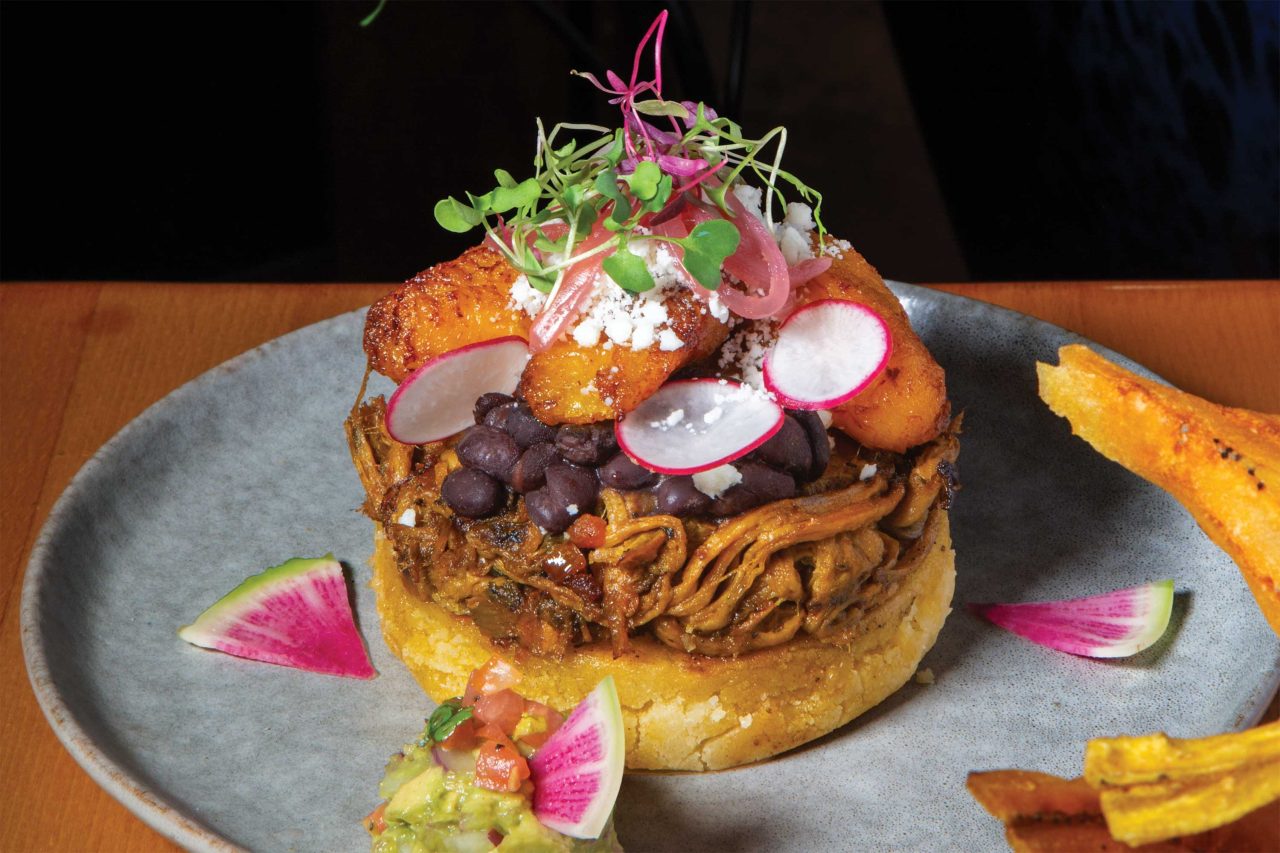
South American cooks have been slinging arepas literally for centuries. Most prevalent in Colombian and Venezuelan cuisines, the flat cornmeal griddlecakes are stuffed with an assortment of fillings that reflect a variety of regional traditions, according to chef-owner Fabio Ocampo of Que Sazón South American Cuisine & Ceviche Bar (622 E. Adams St., Phoenix, 602-919-2246, quesazonrestaurant.com). At his indispensable Downtown restaurant, the native Colombian serves arepa pabellón ($22, pictured), a delightful dish of grilled white cornmeal tinged with butter and topped with succulent shredded pork, layers of agogigi (avocado salsa) and whole black beans cooked with onions. To complete the plate: a tropical retinue of ripe, sweet plantains, cotija cheese and pickled onions. It’s a take on Venezuela’s national dish pabellón criollo, which features shredded beef. Ocampo’s tender shredded pork is the star here, steeped in house-made sofrito salsa peppered with onions and garlic and perfumed with cumin and oregano. “It’s our version of a family recipe and we make it with lots of love.”
Many Latin chefs use P.A.N. white cornmeal, a preferred brand in Venezuelan and Colombian cooking that promises a soft dough, perfect for arepas. At Que Chevere (142 W. Main St., Mesa, 480-474-4954, quechevereaz.com), husband-and-wife team Orvid Cutler and Maria Fernanda make a variety of arepas using P.A.N., including arepa domino ($13),
cooked cornmeal stuffed with refried black beans and Venezuelan white cheese (queso blanco), served with a side of crispy plantain chips for a much-appreciated crunch. Looking for something more snacky? Order the deep-fried mini arepas ($5.50 for six), served with a tangy house-made guasacaca sauce (a guarded family recipe made with green vegetables, vinegar and oil) and a cilantro mayonnaise dipping sauce. Que Chevere’s menu also includes chicken, beef and vegan arepas using Fernanda’s Venezuelan family recipes.
Venezuelan born Gian Franco Brugaletta, chef-owner of Mixela (3410 N. 24th St., Phoenix, 602-795-4299, mixelaphx.com) changes up his arepa fillings several times a year. When we stopped by, he was serving reina pepiada arepas ($15 for two) stuffed with an enticing creamy chicken and avocado salad flecked with cilantro. Brugaletta makes the arepa dough with olive oil rather than butter to keep the dish dairy-free for his customers, and then cooks the formed cornmeal cakes over a flattop grill to impart a smoky element to the dish. “Cold chicken salad is traditional,” he says. Other popular Venezuelan fillings include boiled quail eggs in cocktail sauce; and a medley of cold tuna, tomatoes, onions and avocado. “Some places have 30 or 40 different kinds of fillings,” he says. “In Venezuela, they eat arepas for breakfast, lunch and dinner.”
The post Maize the Force Be with You appeared first on PHOENIX magazine.
Feedback
Love it? Sponsor it to the top of the Phoenix Flyer feed and share it with more locals.
Sign in to sponsor →


Comments