
Chandler's Quiet Revolution: Arizona's Most Livable City
Once a sleepy cotton town, Chandler has grown into Arizona's most walkable, family-friendly suburb—without losing its small-town soul.
Chandler wasn't supposed to be this good. A century ago it was a railroad stop in the cotton fields south of Phoenix, named after a real estate speculator with big dreams. Today, it's consistently ranked among America's safest and most livable cities—but you'd never know it from the way locals talk about it. There's no pretension here, just the genuine affection of people who stumbled into something special.
What makes Chandler different starts with downtown. Most Arizona suburbs built themselves outward and upward, leaving hollowed-out town centers. Chandler went the other way. The historic downtown core along Arizona Avenue has become a genuine gathering place—coffee shops and farm-to-table restaurants alongside the original brick buildings, with the Chandler Center for the Arts anchoring it all. On any given evening, you'll find families walking to dinner, teenagers meeting up before a show, and old-timers recognizing neighbors on the sidewalk. It feels like what people imagine walkable communities should be, except it actually exists and actually works.
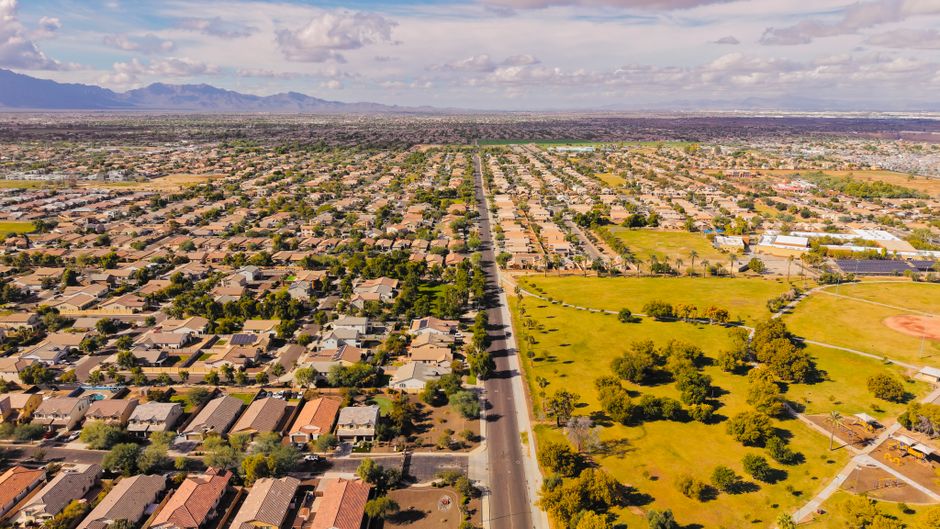
The real secret is the parks system. Chandler maintains over 5,000 acres of green space—an almost obsessive commitment to keeping the Sonoran Desert visible and accessible within the city limits. Paths along the San Marcos Wash connect neighborhoods for miles, and parks like Desert Sky don't just have playgrounds; they're genuine community anchors where you can spend an entire Saturday. In winter, when most of America is shoveling snow, Chandlers are outside. That fundamental access to nature shapes everything about how the city feels.
The education system is legendary for a reason. Arizona School District 2 draws families from across the valley, and the schools themselves—from Hamilton High School to the charter schools scattered throughout—create this distinct culture of expectation and investment. Parents are engaged. Students take AP exams seriously. It matters here in a way that ripples through the whole community.
Newcomers often expect Chandler to feel like a generic suburb of chain stores and cookie-cutter houses. Some of it is, sure. But spend a few months here and you start noticing the texture. The neighborhoods west of Arizona Avenue have older character and tree-lined streets. The south side keeps growing, but thoughtfully. There's real diversity—socioeconomic, cultural, generational. On Chandler's east side, you'll find families who've been here since the cotton days; on the west side, newcomers arriving every week. It works because nobody's pretending Chandler is something it's not.
This is a city that serves families without being boring, grows without chaos, and maintains real community without being claustrophobic. It's the kind of place that sneaks up on you—you move here for the schools or the safety statistics, and you stay because you actually belong here.
Feedback
Love it? Sponsor it to the top of the Phoenix Flyer feed and share it with more locals.
Sign in to sponsor →

Comments